





Probation monitoring is the use of electronic tracking devices, primarily GPS ankle monitors, to enforce court-ordered supervision conditions and keep defendants in the community instead of jail. Courts order electronic monitoring as a structured alternative to incarceration, requiring defendants to comply with specific conditions verified by technology. GPS monitoring improves recidivism reduction by approximately 24–31% compared to standard supervision. That figure tells you something important: the technology works, and courts know it. Understanding how the system operates gives you and your family a real advantage in navigating it successfully.
How do probation monitoring devices work?
GPS ankle monitors are the most common probation monitoring devices in use today. They fall into two main categories: one-piece units, where the GPS transmitter and cellular modem are built into a single ankle bracelet, and two-piece systems, where a separate home base unit communicates with the ankle device. One-piece GPS devices significantly reduce maintenance burdens and false alerts compared to two-piece systems. That matters because a false alert can trigger a violation investigation even when you did nothing wrong.
Every device transmits location data at regular intervals to a monitoring center, typically every few minutes. The data includes GPS coordinates, timestamps, and tamper status. Advanced tamper detection uses fiber optic straps that produce zero false positives, which means any tamper alert the court receives is treated as real evidence. Monitoring platforms also log zone entry and exit events automatically, creating a continuous record of your movements.

Battery management is one of the most overlooked technical requirements. Most GPS ankle monitors require at least 2 hours of charging daily. Missing that window can trigger a low-battery alert that your probation officer receives immediately.
Here is what most devices track and enforce:
- Location boundaries: Defined geographic zones you must stay within or avoid entirely
- Curfew windows: Time periods when you must be at a designated address
- Tamper detection: Any attempt to remove or obstruct the device
- Battery status: Continuous charge monitoring with alerts for low power
- Exclusion zones: Schools, parks, or other locations you are prohibited from entering
Pro Tip: Set a daily phone alarm 30 minutes before your scheduled charging window. Missing a charge is one of the most common and most avoidable technical violations.
What are the typical conditions and durations of court-ordered monitoring?
Court-ordered monitoring conditions vary by case, but most fall into three categories: curfew enforcement, home detention, and exclusion zones. Curfew conditions require you to be at your approved address between specific hours, often overnight. Home detention is stricter, limiting you to your residence except for pre-approved activities like work, medical appointments, or treatment programs. Exclusion zones prohibit entry into specific locations, and the device alerts your probation officer the moment you cross the boundary.
Probation monitoring duration varies widely from 30–90 day intensive phases to multiple years, depending on the court order and case specifics. A first-time misdemeanor may carry a 90-day monitoring term, while a felony conviction can result in two or more years of electronic supervision.
Conditions can change over time based on your compliance record. Courts and probation officers follow a general progression:
- Initial intensive phase: Strict curfews, frequent check-ins, and limited movement permissions
- Compliance review: After 30–90 days of clean compliance, conditions may loosen
- Reduced supervision: Curfew windows expand, and movement permissions increase
- Early termination consideration: Consistent compliance can support a motion to end monitoring early
The probation case manager or probation officer assigned to your case holds significant authority over how conditions evolve. Communicating proactively with your officer, documenting every approved exception in writing, and showing up to every scheduled check-in on time all contribute to a positive supervision record. A probation case management approach that treats your officer as a partner rather than an adversary produces better outcomes.
What does probation monitoring cost, and who pays?
Electronic monitoring fees are the defendant’s responsibility in most jurisdictions. Daily electronic monitoring fees generally range from $5 to $40, with setup fees from $25 to several hundred dollars. A 6-month term can cost roughly $1,800 in fees alone. That number does not include deposits, replacement costs, or administrative charges.
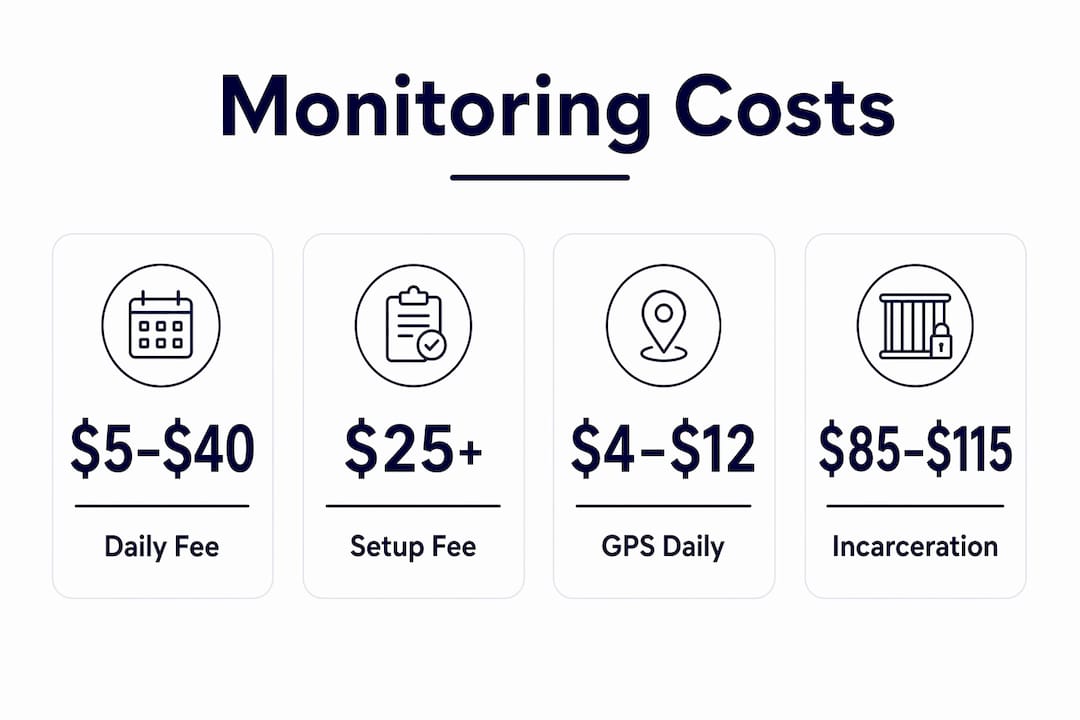
The table below summarizes the typical cost structure:
| Cost Type | Typical Range |
|---|---|
| Daily monitoring fee | $5–$40 per day |
| Setup or installation fee | $25–$300 one time |
| Equipment deposit | $50–$200 |
| Equipment replacement | Varies, potentially substantial |
| 6-month total estimate | Approximately $1,800+ |
For context, GPS monitoring costs $4–$12 per day per offender, significantly less than incarceration costs of $85–$115 per day. Courts and prosecutors use that cost gap to justify monitoring as a fiscally responsible alternative to jail.
Negligent loss or damage of monitoring equipment can result in liability for full replacement costs, which may be substantial. Treating the device with care is not just a compliance issue. It is a financial one.
Many probationers pay monitoring fees themselves, and total costs including deposits and replacements can reach thousands over months. Fee waiver eligibility varies by jurisdiction, but judges do have discretion to reduce or eliminate fees for defendants who demonstrate financial hardship. Ask your attorney to raise fee waiver eligibility at sentencing or at a compliance review hearing.
Pro Tip: Request an itemized fee schedule from your monitoring provider on day one. Knowing exactly what triggers additional charges helps you avoid surprise costs.
How are violations handled, and what are the best practices for compliance?
Violations fall into two categories: technical and substantive. Technical violations are procedural failures, such as a dead battery, arriving home 10 minutes past curfew, or missing a check-in call. Substantive violations involve direct breaches of court conditions, such as tampering with the device, entering an exclusion zone, or leaving the state without permission.
Minor electronic monitoring violations like coming home late or letting the battery die once are often handled administratively with warnings rather than immediate court action. That is good news, but it comes with a catch. Many defendants underestimate the seriousness of minor technical violations until they accumulate and result in formal consequences. A pattern of small violations can trigger a revocation hearing just as quickly as a single serious one.
Dead batteries are often treated as violations regardless of your actual compliance. The device does not know why it lost power. It only reports that it did. Your probation officer receives that alert and must respond to it.
The most effective compliance practices are straightforward:
- Charge daily without exception: Treat charging like taking medication. Same time, every day.
- Get every exception in writing: If you need to travel outside your zone for a medical appointment, get documented approval before you leave.
- Communicate early: If something goes wrong, call your officer before they call you. Proactive communication changes how violations are perceived.
- Know your zone boundaries exactly: Walk the perimeter of your approved area and confirm the GPS coordinates with your officer.
- Keep a log: Document every check-in, every approved exception, and every communication with your supervision team.
“Establishing clear expectations about zones and charging schedules early greatly reduces stress and violations.” This observation from probation case managers reflects what experienced supervision professionals see repeatedly: preparation prevents most violations.
If you face a formal violation hearing, consult an attorney immediately. A probation violations defense attorney can challenge the evidence, present mitigating circumstances, and argue for alternatives to revocation.
What legal protections apply to probation monitoring data?
Electronic monitoring data is court-admissible evidence. Monitoring platforms provide archived, time-stamped objective evidence used during violation hearings. Court-admissible violation packets include detailed GPS trail maps, tamper logs, and zone entry and exit timestamps with chain-of-custody integrity. That level of documentation means the data presented at a hearing is difficult to dispute on technical grounds alone.
You do have rights in a violation hearing. You are entitled to see the evidence against you, present your own evidence, and have legal representation. Data retention policies vary by jurisdiction and monitoring provider, so ask your attorney to request the full data record early. Waiting too long can mean records are no longer available.
Modern probation supervision moves toward objective, time-stamped evidence systems from manual check-in calls. That shift benefits defendants who maintain clean records and creates clear documentation for those who do not. Understanding that every movement is logged helps frame the right mindset: treat the device as a continuous record of your compliance, not just a tracking tool. For defendants exploring whether private compliance tracking can supplement or satisfy court orders, legal guidance is required before making any changes.
Key Takeaways
Successful probation monitoring depends on understanding your device, knowing your conditions, managing costs, and treating every technical requirement as seriously as a substantive one.
| Point | Details |
|---|---|
| Charge your device daily | Dead batteries trigger automatic violation alerts regardless of your actual compliance. |
| Know your cost exposure | Daily fees, setup costs, and equipment liability can total thousands over a monitoring term. |
| Technical violations accumulate | Minor infractions handled with warnings can escalate to revocation if they form a pattern. |
| Monitoring data is court evidence | GPS trails, tamper logs, and timestamps are admissible and difficult to challenge technically. |
| Proactive communication matters | Contacting your officer before a problem escalates consistently produces better outcomes. |
What I’ve learned watching defendants navigate electronic monitoring
Defendants who struggle most with electronic monitoring are not the ones who commit serious violations. They are the ones who underestimate the administrative burden of the device itself. Charging schedules, zone confirmations, written approvals for routine activities like doctor visits. These feel minor until they are not.
The psychological weight of continuous monitoring is real. Knowing that every movement is logged creates a low-level stress that compounds over weeks and months. The defendants who handle it best treat the device as a compliance tool rather than a punishment. That mental shift is not easy, but it is practical.
What I consistently recommend is this: get a written copy of every condition on day one, walk your approved zone to confirm the GPS boundaries match what you were told, and establish a daily charging routine before you leave the monitoring office. Those three steps prevent the majority of technical violations I see.
Legal support matters more than most defendants realize at the start. If conditions feel unworkable or a violation is being handled unfairly, resources like pretrial diversion guidance can clarify your options before a situation escalates. Do not wait for a hearing notice to start asking questions.
— Jake
How Exectreatmentsolutions supports defendants through monitoring and compliance
Exectreatmentsolutions works with defendants and their attorneys to build structured compliance records that courts take seriously. The firm’s pretrial mitigation and court advocacy services include court documentation, progress reporting, and direct support for diversion programs like PC 1000, Judicial Diversion, and Mental Health Diversion. When monitoring conditions feel unmanageable or a violation puts your case at risk, having a structured support team changes the outcome.
Exectreatmentsolutions also provides case management services that coordinate treatment, testing, and compliance documentation in one place. For defendants who need to demonstrate accountability to the court, that kind of organized record is often the difference between a dismissal and a conviction.
FAQ
What is probation monitoring?
Probation monitoring is the use of electronic devices, primarily GPS ankle monitors, to track a defendant’s location and enforce court-ordered supervision conditions as an alternative to incarceration.
How long does electronic monitoring last?
Monitoring terms range from 30–90 days for intensive supervision phases to multiple years for felony cases, depending on the court order and the defendant’s compliance record.
What happens if my ankle monitor battery dies?
A dead battery triggers an automatic alert to your probation officer and is typically treated as a technical violation. Setting a daily charging alarm is the most effective way to prevent this.
Can I get my monitoring fees reduced?
Judges have discretion to reduce or waive monitoring fees for defendants who demonstrate financial hardship. Ask your attorney to raise fee waiver eligibility at sentencing or at a compliance review hearing.
What rights do I have at a probation violation hearing?
You have the right to see the evidence against you, present your own defense, and have legal representation. Consulting a probation violation attorney before the hearing gives you the best chance of avoiding revocation.


